2026 International Day of Women and Girls in Science
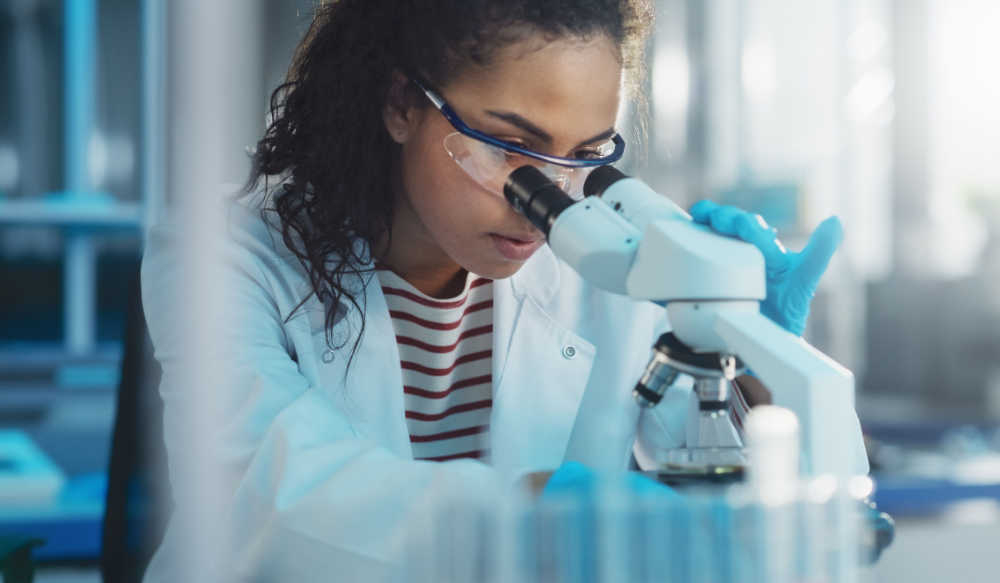
On the occasion of the International Day of Women and Girls in Science, the Barcelona Collaboratorium for Modelling & Predictive Biology highlights two journeys that remind us why representation matters: seeing women doing science makes science more accessible and more sustainable for the next generations. We invite you to take a moment and read the dialogue between two young researchers, that you can access HERE.
Larissa Holzer (Masters’ student, Martin Lab) works at the interface of evolutionary biology and modelling: she explains how mathematics becomes a powerful lever to ask, explore, and solve complex biological questions. She also stresses her source of motivation: the presence of other women in science, which makes it easier to envision oneself in the field and reinforces the idea that perseverance pays off.
Manuela Giraud (PhD student, Martin Lab), trained in biomedical engineering, describes how a deep curiosity to understand how the world works led her towards theoretical biology. She points to a challenge that is often invisible: self-confidence, and the belief that, with enough time and work, anything is accessible. She highlights how motivating it is to grow alongside other women scientists, and to rely on visible role models.
Both EMBL and the CRG have well-developed gender equality plans and strong gender-balance figures. At the Barcelona Collaboratorium for Modelling & Predictive Biology, we actively strive to invite as many women as men across our seminar series, event organisation and decision-making processes.
1) Visibility creates vocations: the more women are visible in labs, seminar rooms, and senior positions, the easier it becomes for others to allow themselves to try, and to stay.
2) Stereotypes still shape choices: biology/medicine attract more women, while maths/physics/engineering remain more male-dominated: hence the importance of acting early (school, guidance, outreach).
3) Environments matter: collaborative, respectful, supportive teams help people progress, dare to ask for help and navigate the frustration inherent to research. Managers have a responsability here.
4) Equality must be tangible: beyond discourse, we need to make opportunities, funding, and support schemes visible.
📌 Read the full interview for their advice on daring to enter fields perceived as “out of reach”, and why having women in science is a powerful accelerator of confidence and ambition.