New perspectives and scientific connections: Melissa Kemp’s stay at the Collaboratorium
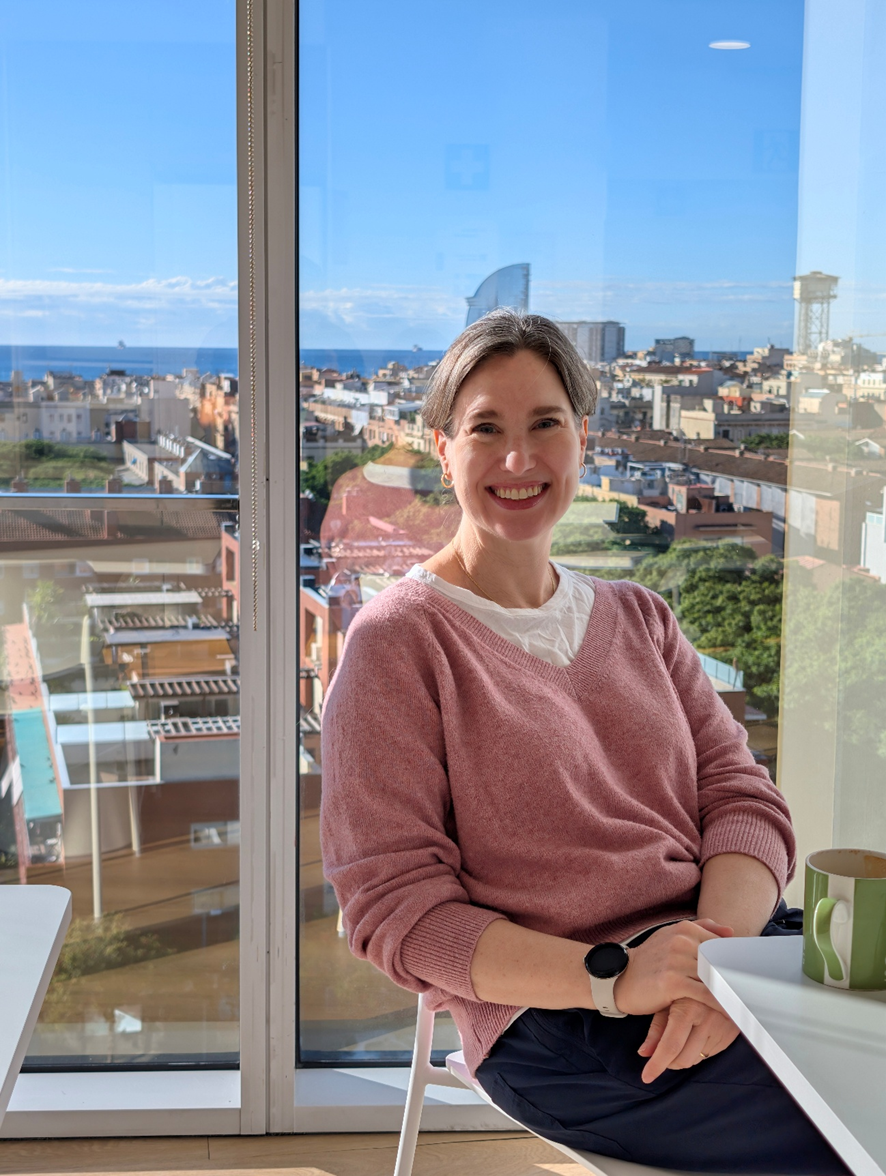
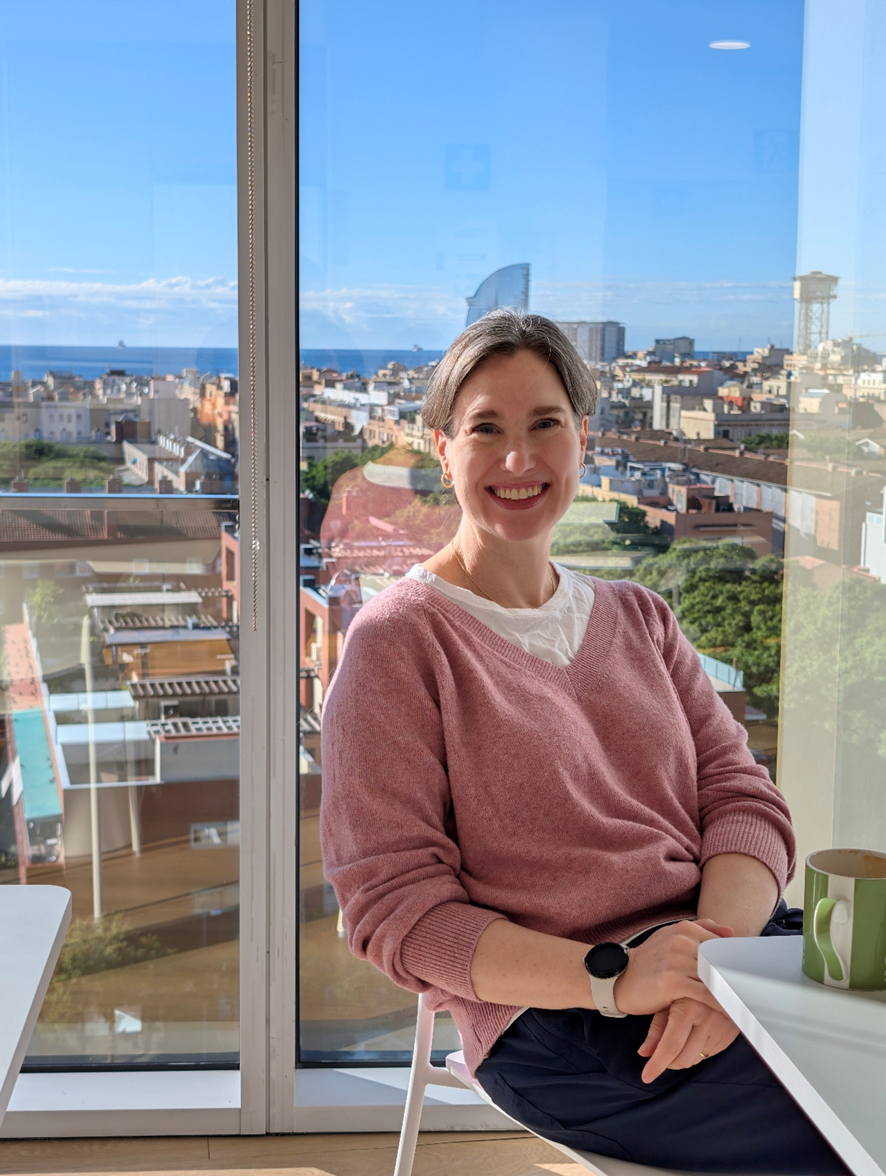
During a two-week stay as a sabbatical fellow, Melissa, a biomedical engineering professor from Georgia Tech, exchanged ideas with Barcelona’s scientific community, explored new approaches and laid the groundwork for potential collaborations. Her visit also gave many of us a valuable opportunity to learn from her.
“What would it mean for us to merge our two expertises together in a new way?” For Melissa, this question captures what distinguishes a research stay from attending a conference. Her time at the Collaboratorium offered space to explore what scientists from different disciplines might build together, beyond presenting their results.
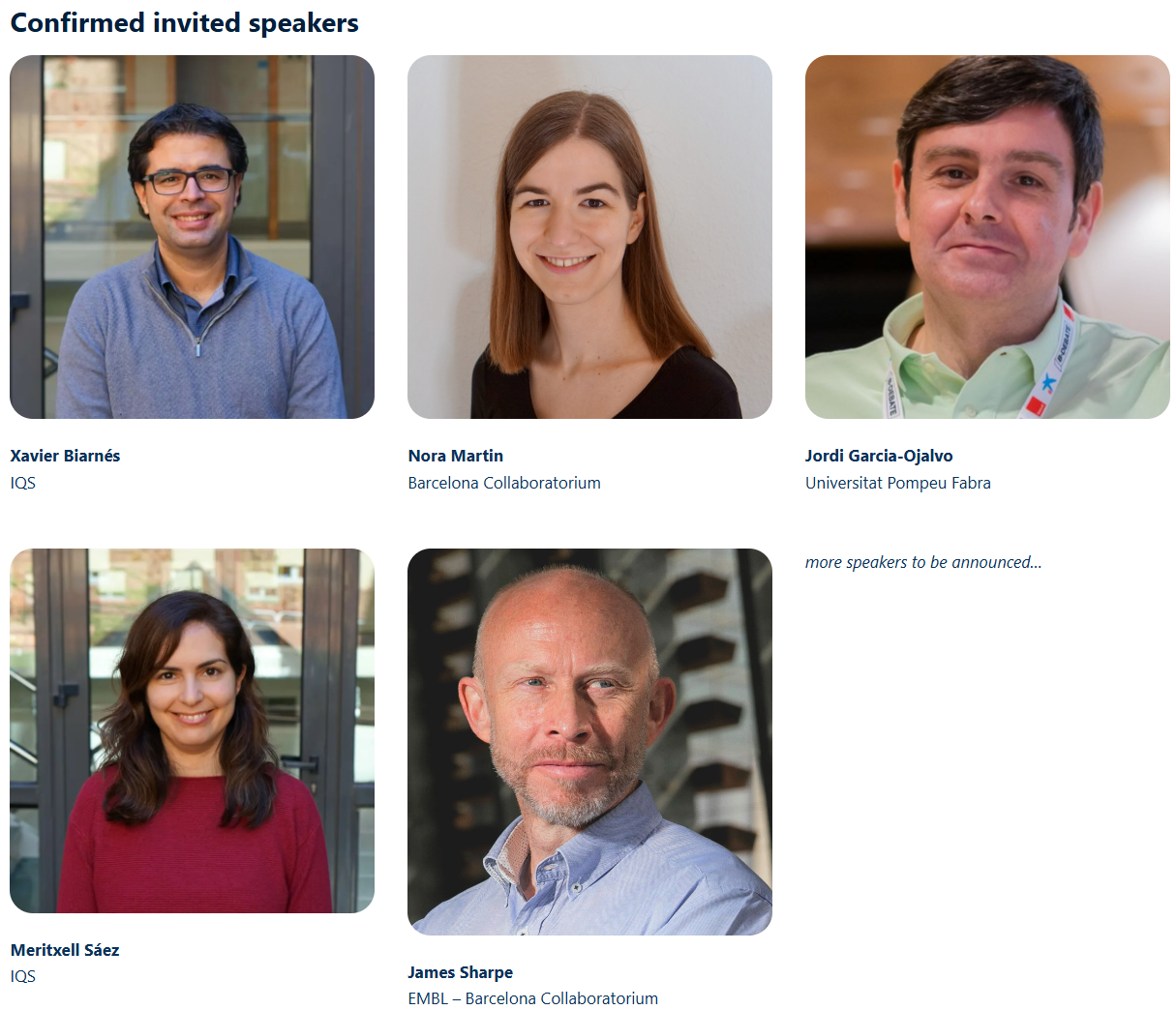
The visit grew out of a renewed connection with James Sharpe, co-chair of the Collaboratorium and Scientific Director of EMBL Barcelona. Melissa had met James several years earlier during his own sabbatical in the United States. After watching him present his research in a webinar, she began considering a visit to work alongside him in Barcelona. As they discussed the arrangements, she discovered the Collaboratorium, whose commitment to bringing disciplines and scientific communities together resonated with her own interests.
Different biological questions, shared approaches
Melissa’s research combines computational modelling with experiments involving cancer cells and stem cells. Her team studies how cells respond to signals and make decisions, with applications ranging from understanding differences in patients’ responses to drugs to improving the manufacture of cells for regenerative medicine. Part of her research also focuses on organoids: understanding how they acquire form and function, and making their production more reliable.
Although these questions may initially seem distant from limb development and digit formation, central themes in James Sharpe’s research, Melissa found substantial common ground in the methods used.
As she explained, “when you kind of peel off the layers and think about the modeling platforms we’re using,” natural connections emerge around analysing processes in space and time and improving models.
Presenting her work at a Collaboratorium seminar helped deepen these connections. Questions from scientists with backgrounds in developmental biology offered fresh perspectives on her research. “I’ve learned about new microscopy tools here, I’ve learned about new modeling tools,” she said, alongside different approaches that could help improve her team’s models.
Time to exchange ideas and build new connections
During her stay, Melissa met EMBL group leaders, researchers from UPF involved in the Collaboratorium, and researchers at IBEC. She also spent a day at the Barcelona Supercomputing Center. These exchanges expanded her professional network, provided valuable feedback on her work and opened possibilities for future collaborations, with specific projects and funding arrangements still to be developed.
For Melissa, much of the value lay in having time to explore ideas together. Conferences offer opportunities to share results; a research stay also creates space to consider how different areas of expertise might contribute to a joint project. Informal encounters play an essential role in this process. “It’s different having coffee,” she reflected, describing the value of sitting together and talking in person.
The symposium: a gateway to the community
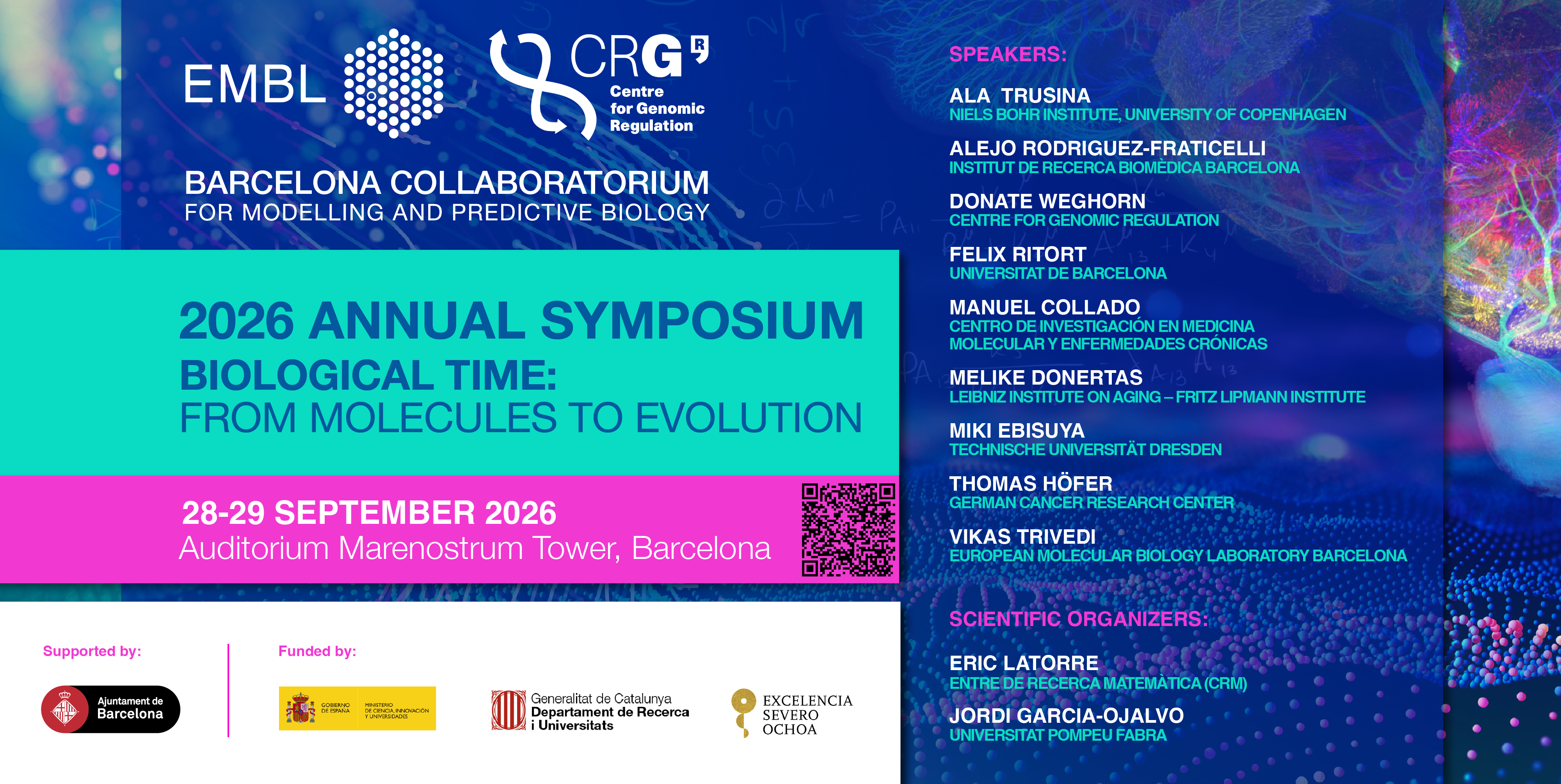
Melissa’s arrival coincided with the Collaboratorium symposium, “Biological Time – From Molecules to Evolution” a fortunate circumstance that enriched her experience from the outset. Talks and poster sessions introduced her to local research and helped her meet scientists from Barcelona institutions she had not originally planned to visit. The presence of researchers from elsewhere in Europe broadened these exchanges further.
“Having the symposium at the beginning of my visit was such a great way to start my time here,” she explained. This early introduction allowed her to discover the breadth and quality of research in Barcelona while making connections she could develop throughout her stay.
An exceptional guest and a shared learning experience
Reflecting on her visit, Melissa highlighted both the scientific exchanges and the welcome she received: “It’s just totally exceeded my expectations.” She praised the surroundings and the generosity of the people she met: “The space is beautiful, the people have been so generous with their time.” Her experience demonstrates the value of an environment where researchers can share questions, discover different methods and take time to think together.
Many of us also learned from her presence, her seminar and the conversations we shared over those two weeks. Through her openness, curiosity and thoughtful contributions, Melissa was an exceptional guest. We warmly thank her for everything she brought to our community and look forward to welcoming her back to the Collaboratorium.
Interview conducted by Bastien Debieve – Project Manager Collaboratorium